




The name stablecoin has been derived for those cryptocurrencies which have been specifically designed to eliminate the problem of volatility in the crypto market. The value of these cryptocurrencies is backed up by other assets such as cash and bonds which make the price of these cryptocurrencies stable in spite of market volatility.
Since the usage of stablecoins has become prevalent in the crypto industry, they are now being used as a bridge between traditional and DeFi sectors. These stablecoins have various use cases such as cross-border settlements, liquidity for DeFi trading, and others.
However, nowadays, stablecoins are grabbing headlines for their capability to provide interest for simply holding them or investing them into the lending pools. This rapidly growing concept is known as stablecoin yield.
What is Stablecoin Yield?
Stablecoin yield is the interest rate or rewards that users can get by using their stablecoins for lending and depositing, or sometimes simply for holding them. There is a mechanism behind this stablecoin yield.
For example, if the user is investing $10,000 in USDC into a lending platform and earns 5% annual percentage yield, they will receive $500 by the end of the year, before fees or compounding. However, according to various market data, the stablecoin yield rate can vary between 3% to 12%.
A stablecoin holder can generate stablecoin yield by using different methods. The list includes interest paid by borrowers, trading fees from liquidity pools, and returns from short-term investments such as United States Treasury bills in some yield-bearing stablecoins.
How Does Stablecoin Yield Work?
Stablecoin yield works through smart contracts that automate the entire process. The crypto lending platform will take the stablecoin and use it for different activities. In return, it generates profit which will be distributed with the token holders.
- Lending – Here, the platform will invest stablecoins into a shared pool. On these lending platforms, borrowers, such as traders or institutions, provide collateral in the form of various tokens such as Ethereum. These borrowers also pay interest to borrow money from the platform. The earned interest is then distributed amongst the stablecoin holders who stake their tokens in lending pools.
- Liquidity Provision – Here, users deposit stablecoins into trading pools on exchanges like Curve on Uniswap. When users swap tokens, they pay fees on these swaps. The fees earned is then distributed to the people who provided the stablecoins to the pool.
- Yield-Bearing Stablecoin – Here, yield-bearing stablecoins create a process where they pass along earnings from their reserves or investment strategies.
- CeFi Platforms – Centralized finance (CeFi) platforms are lending out tokens to verified borrowers, and in return, users get a rate of return.
As we all know, the digital asset market is highly volatile, and a stablecoin’s yield can change based on the strategy it follows. When many people want to borrow, the staking yield gives higher interest. In the DeFi sector, the smart contract distributes stablecoin yield in an automatic manner.
How to Earn with Stablecoins?
Stablecoin yield can be earned through the following steps:
Step 1 – First, buy stablecoins like USDC, USDT, etc., from the regulated platforms or exchanges.
Step 2 – After buying stablecoins, users should invest these stablecoins into DeFi or CeFi platforms.
Step 3 – These stablecoins can then be deposited on platforms of your choice, and then the user can start earning APY. Also, the user can withdraw their investment at any given point.
Best Stablecoin Lending Platforms to Earn Yield
Here are the leading platforms to earn a better stablecoin yield.
- Aave – Aave is one of the biggest lending platforms, where users can take advantage of deep liquidity, thanks to its multi-chain support. On Aave, users can generate an annual yield of around 3.5% to 7%.
- Morpho – This is a platform where users can get higher rates through optimized vaults and techniques like peer-to-peer matching.
- Compound – This is the best platform for USDC as it is safe, reliable, and provides almost 5% of APY.
Boom in Stablecoin Market
Amid the growing regulatory developments and mainstream adoption by financial institutions, the overall stablecoin market is growing at an impressive rate. The market capitalization of stablecoins has hit $320 billion, as per the data reflected by DeFiLlama. The market cap has managed to reach this height because of the growing adoption of stablecoins such as USDT, USDC, and others. Every year, the stablecoin sector experiences trillions of dollars worth of transactions.
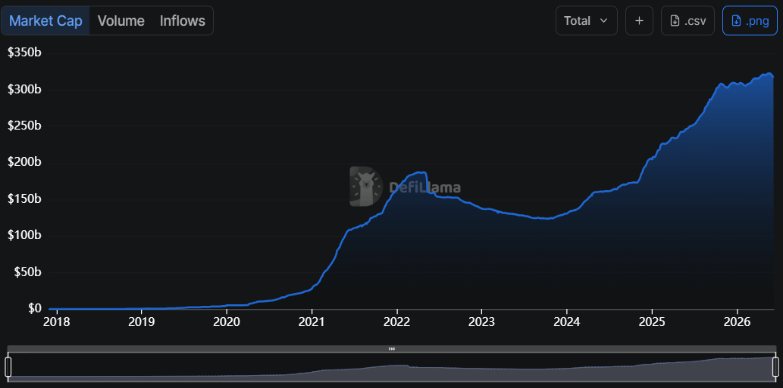
(Source: DeFiLIama)
The growth in the stablecoin market has been witnessed after the approval of the GENIUS Act. In 2025, U.S. President Donald Trump signed the GENIUS Act and turned it into the first federal law for stablecoins. Apart from this, there is ongoing regulatory development for crypto market structure bills, which are expected to bring much-needed regulatory clarity for the digital asset market.
Why Banks Are Opposing Stablecoin Yields
While the stablecoin market is growing rapidly, traditional banks have expressed their concerns over stablecoin yield. They are saying that if stablecoins provide yields or interest rates higher than the bank deposits, people will start withdrawing their money from bank deposits.
Recently, JPMorgan Chase CEO Jamie Dimon waged war against the crypto sector over a stablecoin yield. He said that “it allows them to effectively pay interest on deposits, stablecoins, or something like that, without the protection that they should have. The banks will not accept it that way. … I’m not worried about stablecoins, but if it happened, I’m telling you I will have nothing to do with it, and it will eventually blow up.”
Because stablecoin reserves are kept in Treasury securities and are not lent out like bank deposits, there is a high chance that it could reduce the ability of banks to make loans to businesses.
Banks have raised warnings that it could create a deposit flight worth billions of dollars. It will also increase the cost of borrowing. According to the current draft for the CLARITY Act, the regulators are planning to prohibit direct stablecoin yield while keeping doors open for activity-based rewards.
Conclusion
In the last few months, stablecoin yield has gained the attention of investors as it converts the token into working money. Amid the growing regulatory clarity, both CeFi and DeFi platforms are becoming centers of attraction for investors. They can earn steady interest while taking advantage of the stability that the stablecoin comes with.
However, there is still regulatory uncertainty in the digital asset market. In this ambiguity, many platforms that provide stablecoin yield are not following regulatory compliance. Also, there are so many lending pools in the DeFi sector that have become a soft target for hackers, allowing them to steal millions of dollars from various lending pools. That is why it is important to choose a platform for stablecoin yield after doing deep research.