




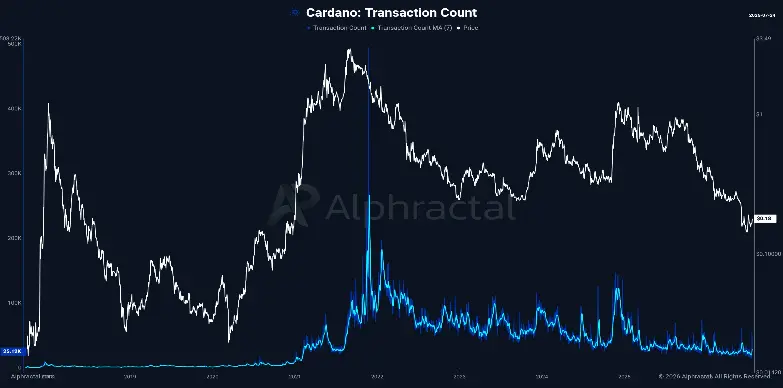
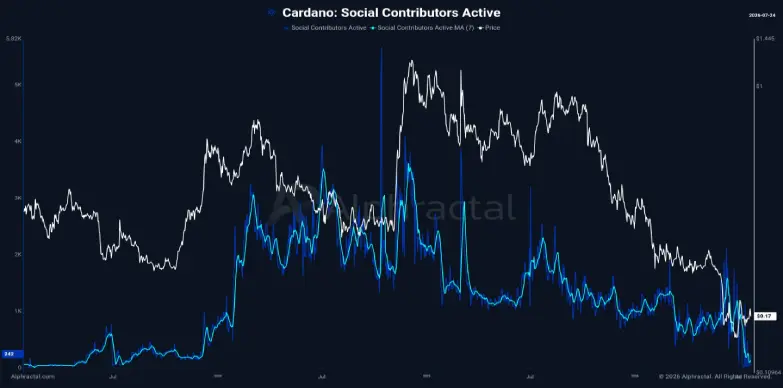
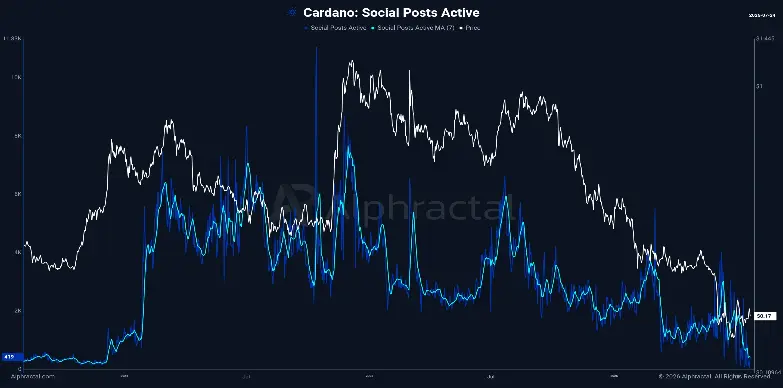
ADA, the native token of the layer-1 blockchain Cardano, plunged roughly 2.3% on Friday, currently trading at $0.1647. While the initial drop followed Bitcoin’s pullback below $65,000, the selling pressure on Cardano’s price remained higher due to a significant reduction in its on-chain activity. Major metrics like transaction count, social posts, and contributors show their activity plummeted to a multi-year low, suggesting a significant drop in underlying demand.
Cardano Faces Declining On-Chain Activity and Social Interest
On Friday, June 24th, the global crypto market cap dropped roughly 1% to around $2.19 trillion. The selling pressure seen in most major cryptocurrencies can be traced to renewed geopolitical uncertainty and rising oil prices.
Yesterday, U.S. President Donald Trump threatened Iran and the Houthis in Yemen with “major military punishment” if they carry on their attacks against the vessels of the Saudi Armed Forces in the Red Sea.
In the overall risk-off mood, Cardano price has declined by approximately 5.8% during the previous 48 hours to $0.1647, and its market cap has fallen to $5.99 billion.
In a recent tweet, analytics platform Alphractal highlights the ongoing challenges that Cardano is facing, noting that its price performance has disappointed its investors since the 2021 bull market peak.
The chart below shows that Cardano’s network volume witnessed a significant surge during late 2021 and early 2022, with an increase in user growth, before entering a major downtrend. As of late July 2026, the transaction volume has dropped from hundreds of thousands of daily transactions at its peak to 25k, signalling a massive reduction in network participants.
Social metrics reveal a similar story. The platform’s social contributors monitoring also indicates that the activity has dropped considerably, from more than 5,000 to a few hundred.
Similarly, Cardano social posts have dropped drastically from a late 2024 high near 11k per day to less than 500 now. These metrics closely track ADA’s price movements, which have struggled to recapture earlier enthusiasm.
The tweet touches on some relevant issues regarding the project’s trajectory, including slow implementation, unmet promises, and perhaps too much early optimism, which could have hurt Cardano’s image as the faster-moving rivals like Ethereum, Hyperliquid, and Tron remained active and innovative.
“It is also important to consider that the current lack of interest could represent an investment opportunity,” Alphractal noted. “During bear markets, social interest normally declines significantly.”
Therefore, some market participants could see the current lack of activity as a textbook bear market indicator and a buying opportunity, but the data shows that narrative changes and execution gaps are still affecting investor activity in the dynamic crypto market.
Cardano Price Needs to Hold this Support Before Next Recovery Push
For nearly two months, the Cardano price has been wavering around the $0.160 level amid the broader market uncertainty and Bitcoin’s prolonged sideways trend. However, a deeper look into ADA’s daily chart shows its consolidation has formed three distinct rebounds that reflect the formation of a classic reversal pattern called an inverted head and shoulders.
These three reversals reflect increasing buying pressure from below as sellers failed three attempts to drive a deeper correction in price, as per the ADA forecast. However, due to the current market correction, the ADA price could fall 4.5% and break below $0.1554 support.
The momentum indicator RSI, back to 45%, signals increasing bearish pressure on the ADA price.
This breakdown could invalidate the bullish thesis and drive continued correction to $0.1382.
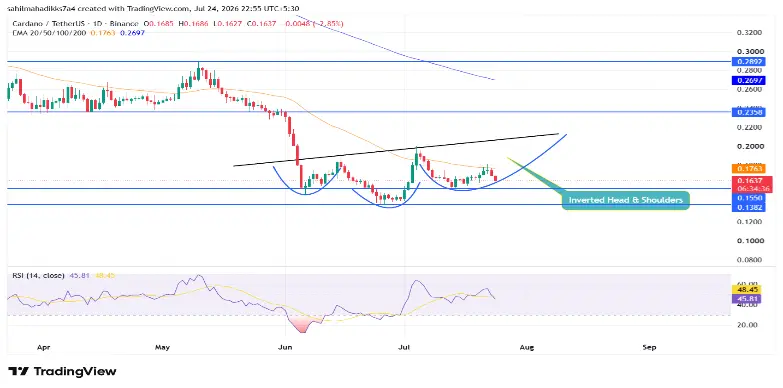
On the contrary, if the buyers manage to hold $0.1554, the ADA coin price could continue to build the H&S pattern, rise roughly 30% to $0.211, and challenge the neckline resistance shown in the above chart.
Therefore, a bullish breakout from the neckline will accelerate the buying pressure for a stronger recovery.