



MEV Meaning in Crypto?
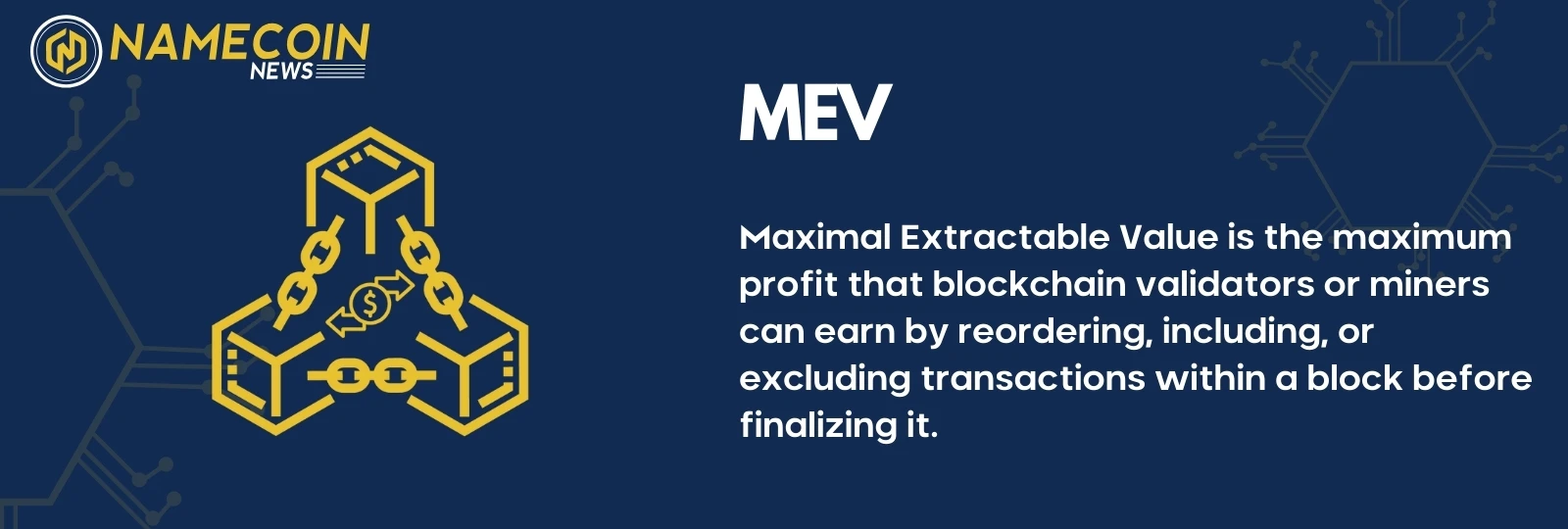
MEV (Maximal Extractable Value) is the extra profit that validators, miners, or bots can earn by controlling how transactions are ordered, included, or excluded within a block. It’s most significant on networks like Ethereum and Solana, where the order of transactions directly affects both profits and the experience of ordinary users. (MEV originally stood for “Miner Extractable Value,” but was renamed after Ethereum’s shift to proof-of-stake, where validators, not miners, produce blocks.)
How Does MEV Work?
MEV extractors maximize their profits by strategically arranging the order of transactions in a block. Validators and bots scan pending transactions in the mempool, looking for front-running, sandwich, and arbitrage opportunities. These tactics drive up gas fees and strain network performance, profiting the extractors at the expense of regular users.
Types of MEV
- Front-Running: A bot or validator places its own transaction ahead of a large pending trade, profiting from the price move that trade will cause.
- Sandwich Attacks: An attacker places a buy order just before a target’s trade and a sell order just after it, manipulating the price to extract value from the victim.
- Arbitrage Trading: Extractors spot and exploit price differences for the same asset across different decentralized exchanges (DEXs).
- Liquidation Profits: Bots race to trigger or capture liquidations in lending protocols to claim the associated rewards.
Pros and Cons of MEV
Pros:
- Improves market efficiency in DeFi, since arbitrage helps keep prices aligned across platforms.
- Encourages validators and miners to participate by offering extra rewards.
- Supports more accurate price discovery across the network.
Cons:
- Causes network congestion and pushes gas fees higher.
- Gives MEV bots an unfair advantage over ordinary users.
- Reduces overall market fairness and transparency.
Mitigating MEV Risks
- Flashbots lets users submit transactions privately and bundle them together, which helps prevent front-running.
- Fair Sequencing Services provides tools that establish fair transaction orders in distributed systems.
- Layer-2 networks lower transaction costs and reduce exposure to MEV at the same time.
- Private mempools shield sensitive trades from bots by keeping them hidden until they’re executed.
MEV on Solana vs. MEV on Ethereum
- Causes network congestion and pushes gas fees higher.
- Gives MEV bots an unfair advantage over ordinary users.
- Reduces overall market fairness and transparency.
Mitigating MEV Risks
- Flashbots lets users submit transactions privately and bundle them together, which helps prevent front-running.
- Fair Sequencing Services provides tools that establish fair transaction orders in distributed systems.
- Layer-2 networks lower transaction costs and reduce exposure to MEV at the same time.
- Private mempools shield sensitive trades from bots by keeping them hidden until they’re executed.
MEV on Solana vs. MEV on Ethereum
MEV exists on both networks, but it looks different on each.
Ethereum MEV
- A public mempool and high gas fees make MEV highly visible and valuable, with searchers competing through Priority Gas Auctions (PGA) to get their transactions ordered first.
- Flashbots is the leading mitigation tool, letting users submit transactions privately and bundle them to avoid front-running.
- Validators earn additional rewards by including these MEV bundles in the blocks they produce.
Solana MEV
- Contrary to a common assumption, Solana’s low fees and high trading volume have fueled MEV rather than suppressed it. Sandwich attacks alone extracted an estimated $370–$500 million over a 16-month period, with memecoin trading a major driver.
- The biggest reductions came from intervention, not architecture: Jito closed its public mempool in March 2024, and the Jito Foundation and Solana Foundation blacklisted dozens of validators found to be enabling attacks.
- The threat has shifted rather than disappeared. MEV has moved from the mempool to the validator set, with “wide” multi-slot sandwiches growing to account for the majority of sandwich activity. Many users now pay small tips through Jito to have their trades processed privately.
- Contrary to a common assumption, Solana’s low fees and high trading volume have fueled MEV rather than suppressed it. Sandwich attacks alone extracted an estimated $370–$500 million over a 16-month period, with memecoin trading a major driver.
- The biggest reductions came from intervention, not architecture: Jito closed its public mempool in March 2024, and the Jito Foundation and Solana Foundation blacklisted dozens of validators found to be enabling attacks.
- The threat has shifted rather than disappeared. MEV has moved from the mempool to the validator set, with “wide” multi-slot sandwiches growing to account for the majority of sandwich activity. Many users now pay small tips through Jito to have their trades processed privately.
In short, Ethereum’s MEV is shaped by its open mempool and fee market, while Solana’s has been shaped by high-volume retail trading and a series of validator-level crackdowns.
Conclusion – Future of MEV in Crypto
As blockchain networks evolve, keeping MEV in check will be central to maintaining a fair and efficient ecosystem. Solutions like private mempools, Layer-2 rollups, and improved consensus and sequencing designs all aim to reduce its harmful effects. For traders and developers, understanding how MEV works and how to protect against it is an essential part of navigating DeFi and the wider blockchain landscape.