

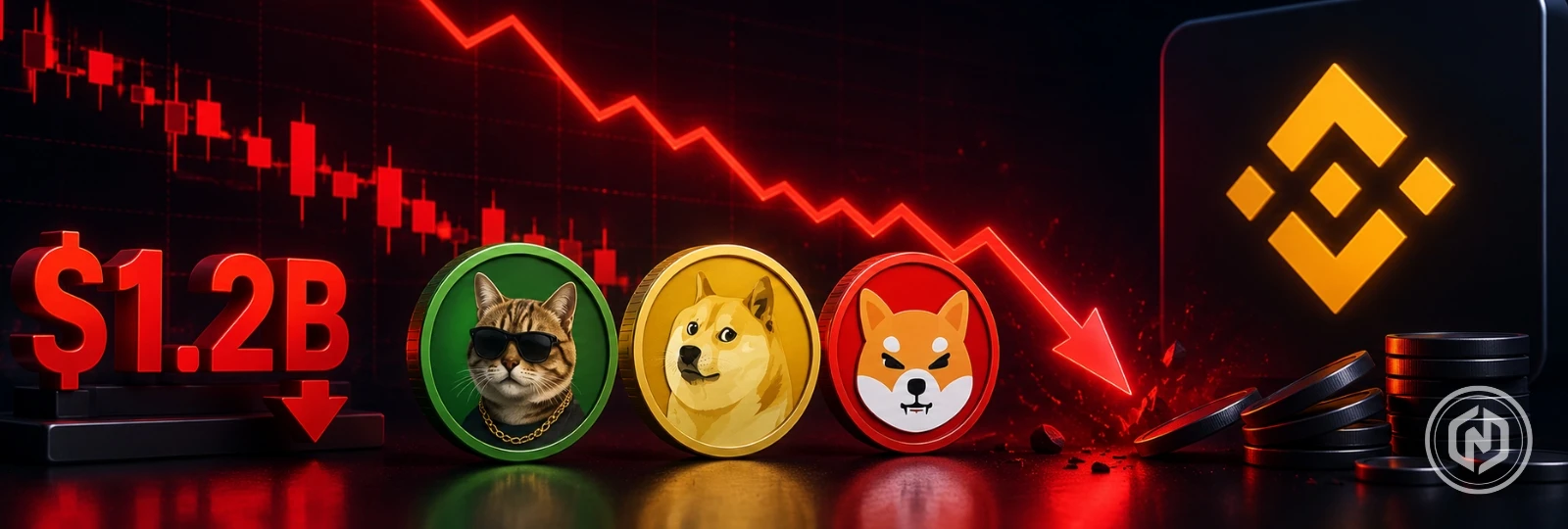


- CryptoQuant reports $1.21B in net memecoin selling on Binance.
- The number suggests that investors are exiting high-risk memecoins as the crypto market is currently volatile.
- Memecoin listings and exchange support continue to decline.
According to CryptoQuant, a well-known blockchain and on-chain data analytics platform, since Bitcoin hit its last all-time high in October 2025, the broader crypto market has cooled, and memecoins have borne the brunt. The study indicates a clear trend where memecoins have experienced heavy net selling on Binance, with cumulative outflows totaling about $1.21 billion. This is just another example that shows that meme-led corners of crypto are highly sensitive to market turns.
Memecoins are built on hype. Their price moves are usually driven by social buzz, celebrity moments, or sudden listings, and they usually do not have any fundamentals to follow. This feature makes them great for quick, speculative gains; however, they are terrible for reliable growth.
When Bitcoin and other blue-chip assets (such as Ethereum, Solana, XRP, BNB Chain) soften, traders usually exit memecoins first, and the Binance figures highlight this behaviour very clearly.
What the Numbers Show?
Binance’s net volume for memecoins, essentially buys minus sells, sits at negative $1.21 billion since Bitcoin’s last peak (as mentioned above). So basically, more memecoins have been sold than they have been bought, to the tune of over a billion dollars. This wave of selling hit the sector’s most speculative tokens the hardest, accelerating price declines across the board.
This kind of wholesale deleveraging is typical in corrections: traders take profits or cut losses by exiting the riskiest positions, and memecoins are usually the first ones to go. The result is a magnified downturn for tokens that already have fragile price support and thin liquidity compared with larger projects.
A Recent Example Includes CASHCAT
CASHCAT exploded onto the scene after Robinhood launched its own blockchain, riding a wave of platform attention and CEO endorsement to skyrocket in days. The token, pitched as a playful nod to Robinhood’s early mascot, saw massive volume and rapid price gains as retail traders rushed in, with a very few early wallets turning tiny stakes into large windfalls.
But the rally was, however, driven by buzz more than fundamentals. The liquidity was thin, there were concentrated holdings, and hype left the prices vulnerable to fast dumps. So basically, CASHCAT shows how a platform event can easily ignite a memecoin sprint, and how quickly that sprint can reverse completely.
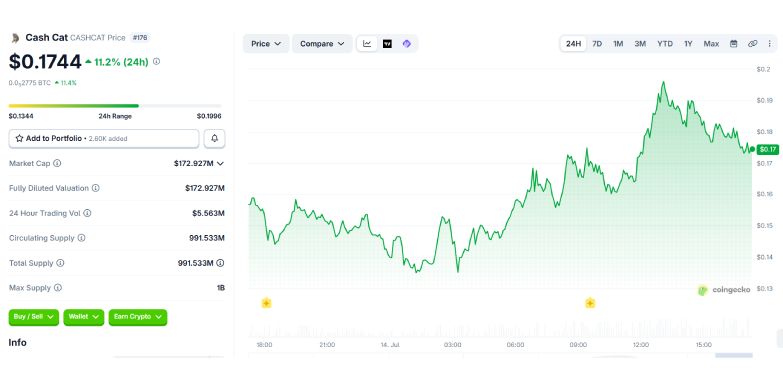
As of now, the price of the token stands at $0.1744 with an uptick of 11.2% in the last 24-hours as per CoinGecko.
Memecoin Listings Cool as Exchanges Turn Selective
Moreover, according to a study carried out by CryptoRank, memecoin listings on centralized exchanges are cooling fast. After peaking at 196 new listings in Q4 2024, the number fell for six straight quarters and dropped to just 41 in Q2 2026, a steep 79% slide from the high. This brings the market back to levels last seen in Q3, before the memecoin frenzy really took off.
These numbers indicate that exchanges are now getting more and more selective, and the easy hype era seems to be over. Fewer listings usually mean weaker retail speculation, less launch-day momentum, and more caution from trading platforms. For readers, this is a useful sign that the memecoin boom has shifted from fast expansions to a slower, more filtered market.
Moreover, there have also been delistings of tokens on various centralized exchanges. This delisting also suggests that the days of easy listing are also over. After the market cycle pushed many joke tokens onto major exchanges, platforms are now trimming back rigorously, and memecoins are amongst the biggest casualties.
In H1 2026, Gate drove most of the removal activity, and a large share of the delisted assets came from sectors such as memecoins, DeFi, and GameFi. For these tokens, this means that there is weaker support from the exchanges, the visibility is lower, and they are less liquid. So basically, the tokens that once benefited from the hype are now being pushed out as the trading interest fades.