


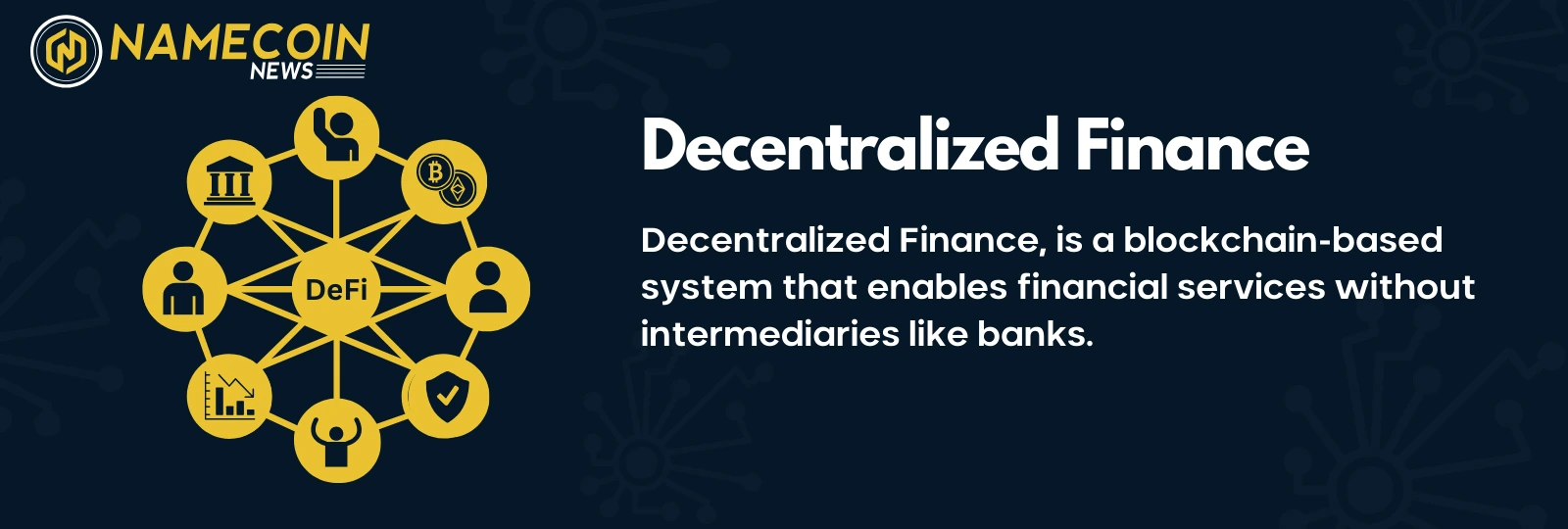


In the sphere of cryptocurrency, DeFi is a term that may be more commonly heard among people, which is redefining the future of finance. DeFi is an abbreviation of Decentralized Finance, thereby meaning the whole financial structure or system that works without a central intermediary; for instance, a bank or financial institution.
DeFi forms a new means through which an individual can have access to financial services, thanks to blockchain technology. It may alter how people borrow, lend, trade, and even invest. In this article, we will explore the meaning, how it works, its history, and how it will change the ever-changing financial landscape of the world.
What is Decentralized Finance (DeFi)?
In order to answer what DeFi is, we need to first introduce its origin. DeFi, or Decentralized Finance, is the name of an ecosystem of financial applications established on blockchain networks. Such smart contracts are self-executing, in the sense that they do not require an intermediary between parties, such as a bank or broker, to include in their agreement in order to be executed.
DeFi is one of the most important concepts in the digital asset industry, alongside blockchain, smart contracts, staking, and decentralized applications. You can explore these and many other terms in our crypto glossary.
Smart contracts, running on decentralized blockchain platforms, make financial services more accessible, transparent, and efficient. In a nutshell, what is DeFi? It is an open, permissionless financial system in which users engage in a host of financial activities ranging from borrowing, lending, trading, and investing without middlemen.
How Does DeFi Work?
Understanding what DeFi is in crypto requires knowledge of blockchain technology and smart contracts. Here’s a simplified look at how DeFi works:
- Smart Contracts: Smart contracts formed the foundation of DeFi applications that execute financial transactions based on a set of pre-defined conditions.
- Decentralized Platforms: The financial systems utilizing the DeFi operate on decentralized, independent bases such as Ethereum or Binance Smart Chain, where each and every user has control over their assets.
- Lending and Borrowing: Users can lend to earn interest and borrow against their assets without the need to use a central bank.
- DeFi wallets. There are wallets such as MetaMask or Trust Wallet that enable consumers to be able to hold and manage their DeFi tokens in a secure manner so that they can interact with DeFi protocols directly.
- Liquidity pools: People contribute to liquidity pools that facilitate DEXs, allowing people to trade peer to peer.
DeFi platforms allow one to handle finances directly from a DeFi wallet, because of which third-party custodians are not required at all.
Why Is DeFi Important?
DeFi is, therefore, the decentralized counterpart of traditional banking and financial services. So what does it say about the importance of the DeFi system?
- Decentralization: There is no such entity as a bank, brokers, or other types of financial intermediaries that are required for conducting operations; assets are completely controlled by the users
- Global Accessibility: Anyone having access to the internet can be able to use DeFi services; any person in the world, without regard to location, financial status, etc.
- Transparency: Since every transaction on the blockchain has some references, in essence, transparency and verifiability mark the transactions by anyone.
- Permissionless: DeFi operates without a central authority, meaning no one can censor or limit access to financial services.
To understand what DeFi is and its significance reveals the transformative potential of decentralized finance in creating an open, inclusive financial system.
Advantages & disadvantages of DeFi
Many advantages, though DeFi has its drawbacks; here are the pros and cons.
| Pros | Cons |
|---|---|
| Decentralization – Users retain full control over their assets without relying on central institutions. | Regulatory Uncertainty – DeFi operates in a regulatory gray area in many jurisdictions, creating potential legal and compliance risks. |
| Transparency – Transactions are recorded on public blockchains, making them verifiable and reducing the risk of fraud or manipulation. | Smart Contract Risks – Bugs or vulnerabilities in smart contracts can be exploited, potentially leading to significant financial losses. |
| Accessibility – DeFi provides financial services to unbanked and underbanked populations worldwide, requiring only an internet connection. | Volatility – DeFi assets and cryptocurrencies can experience sharp price fluctuations, increasing investment risk. |
| High Return Potential – Opportunities such as staking, lending, and yield farming can offer returns higher than traditional savings products. | Complexity – DeFi platforms can be difficult for beginners to understand and use, often requiring a steep learning curve. |
These pros and cons are actually the opportunities and challenges of decentralized finance, and you will get a better idea of what DeFi crypto is in practice.
DeFi History
The full history of DeFi itself originates from the creation of Bitcoin in 2009, but its actual development began with the emergence of Ethereum in 2015, which introduced smart contracts, allowing the development of decentralized applications, also called dApps. Here are the key events in DeFi’s history :
- 2015: Ethereum- the launch of smart contracts and decentralized applications.
- 2017: Birth of MakerDAO. This will be the very first DeFi platform that will bring decentralized lending and borrowing right into its own stablecoin, DAI.
- 2020: Summer of DeFi. It could even be called so for the massive surge in DeFi platforms. This was to be the year in which, indeed, billions of dollars were locked into DeFi protocols-Uniswap, Aave, Compound, etc.
- 2021: DeFi staking and yield farming thrived, and mainstream attention was more entrenched in the real potential of decentralized finance.
These milestones represent this very clear growth and metamorphosis of DeFi.
DeFi Various Components & Key Facts
The ecosystem of DeFi is profound, and some components have been motivating it. A few of these aspects are mentioned here.
- DeFi Tokens: These are UNI (Uniswap) or COMP (Compound) kinds of tokens wherein governance or utility can be seen into its respective DeFi platforms.
- DeFi Staking: Users lock their tokens in smart contracts and receive incentives for doing so, which helps in securing and providing liquidity in the platforms.
- Popular DeFi platforms: Some of the popular names of DeFi include
- Uniswap – An open-source decentralized exchange
- Aave – A lending/borrowing platform
- Synthetix – Platform for creating synthetic assets
- DeFi wallets: A wallet like MetaMask or Ledger is necessary to access DeFi services like storage of your tokens and to interact with decentralized applications.
Each of these parts contributes to the broader definition of DeFi and its working within the cryptocurrency world.
Benefits of DeFi
DeFi offers lots of benefits, which attract both crypto lovers and traditional investors as well:
- Financial Inclusion: DeFi allows anyone with a digital internet connection to participate in the world financial system, completely removing entry barriers.
- Efficiency: Transactions on DeFi platforms are fast, with most of them settling in minutes rather than the days a bank transfer can take.
- Ownership: There is full ownership of assets compared to traditional banking, in that money is handled by third parties.
- Innovation: DeFi is innovative. New financial products like synthetic assets, yield farming, and decentralized exchanges are constantly coming up.
Conclusion: Future of DeFi
In conclusion, DeFi is more than just a trend-it is a revolution in the financial sector. More precisely, it is meant to provide individuals with an access point to an open, all-embracing, and efficient financial system powered by blockchain with minimum dependence on centralized authorities. There are plenty of applications for DeFi, from simple lending and borrowing to trading and more.
And as DeFi grows, the impact of DeFi on traditional finance will certainly increase. The users all over the world will enjoy more financial freedom and innovation as it increases. As regards one who wishes to engage with the future of finance, it is proper first to know what DeFi is.