

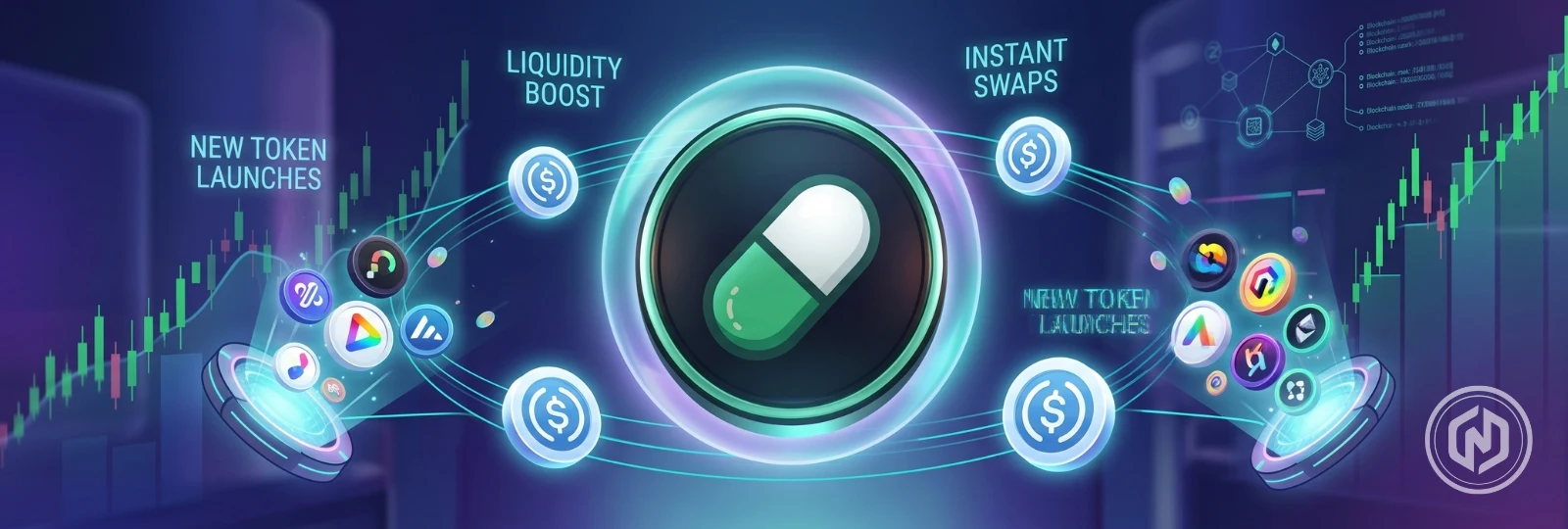


- On May 21st, Pump.fun plans to introduce USDC trading pairs for new token listings, allowing users to move away from the exclusive Solana (SOL) pairing.
- Reduced reliance on SOL conversions may lower future sell pressure tied to operational treasury management.
- A falling wedge pattern drives the current correction trend in Pump.fun price.
On Tuesday, the Pump.fun coin plunged roughly 2.16% during U.S. market hours to trade at $0.00167. The downtick follows the foot setup of the Bitcoin price, which recently breached below the $76,500 floor. Despite the broader market pressure, Pump.fun could witness a surge in underlying demand as the platform plans to introduce USDC trading pairs for new token listings starting from May 21, marking a shift from its SOL-only model.
Pump.fun Adds USDC Pairs for New Tokens
Pump.fun, the main token launch platform on Solana, will start allowing USDC pairs for newly created tokens beginning May 21. The platform announced the intended change on May 7th and clarified that existing SOL-based pairs will continue unchanged.
Until now, every token that completed its bonding curve on Pump.fun moved to the platform’s PumpSwap automated market maker. Liquidity for those tokens was added exclusively against SOL, with those Solana tokens permanently locked in pools.
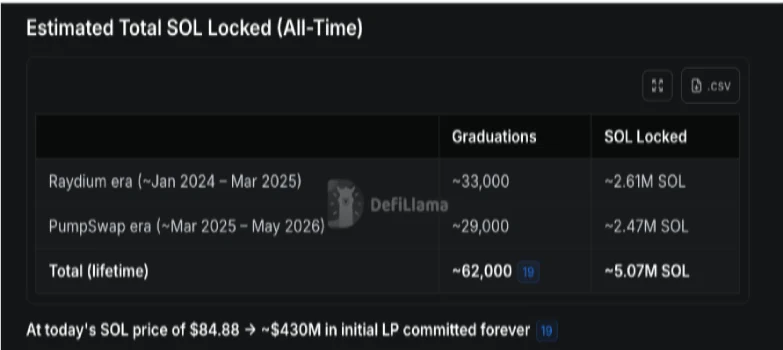
Based on data from DefiLlama, the process has already pulled 5.07 million SOL, which are currently priced at around $430 million, out of circulation since the platform’s launch in January 2024. Major tokens that were minted via the service introduced even more locked-up amounts.
Shift in Fee and Capital Flows
Most of the fee revenues of Pump.fun have been collected in SOL. Previously, platform operators had to transform parts of this SOL into stable assets to meet operational costs. With USDC pairs now available for new launches, a larger share of future trading activity and fees will settle directly in stablecoins. This decreases the amount of SOL that needs to be converted downstream or sold.
Some feedback from users has been mixed. A few said that the update came too late. Others pointed to potential benefits like less short-term price volatility for new tokens and more consistent entry/exit points.
This comes shortly after Solana Foundation President Lily Liu’s recent statement that “memecoins don’t define Solana”. The pairing adjustment directly affects liquidity and fees that accumulate for the future tokens, without impacting any previous tokens already in SOL pools.
Ongoing Revenue Strength
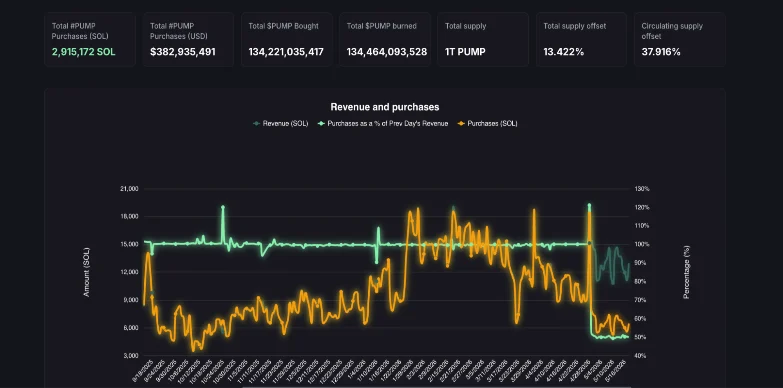
Pump.fun has remained one of the top apps on Solana in terms of revenue. Despite reducing its weekly buybacks by 50% just three weeks ago and incinerating 123 billion PUMP tokens, the weekly buybacks are still more than 463% higher than those of other Solana protocols.
According to on-chain data, over $382 million has been spent on PUMP buybacks so far. These transactions have reduced the total number of tokens in circulation by 13.4% and the total tokens sold by 37.9%. The team kept 50% of protocol revenues for ongoing development and ecosystem allocation.
A move to USDC pairs eases some SOL exposure for new launches. Going forward, the makeup of locked capital and fees will shift as liquidity added for the upcoming tokens will now be based on Stablecoin Matching.
Pump.fun Price Drives Steady Correction Within Wedge Pattern
In the last two weeks, the Pump.fun coin experienced a V-top reversal from $0.00225 to its current trading value of $0.0016, registering a 26% loss. An analysis of the daily chart shows this reversal as a bear cycle within the formation of a falling wedge pattern.
Theoretically, the chart pattern drives a steady correction trend within two converging trendlines, before the price builds sufficient momentum for the next breakout. If the pattern plays out as expected, the Pump.fun price could plunge another 8.37% and challenge the bottom support trendline at $0.00152.
A bearish breakdown below this floor will accelerate the selling pressure and drive an extended drop to $0.0013.
However, with the potential development and pattern formation, the coin price is more likely to rebound from the bottom support and drive a renewed recovery to the overhead trendline, as shown above.
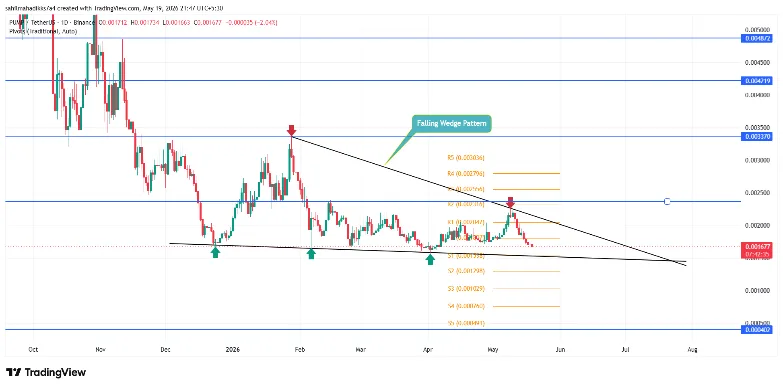
A bullish breakout from this resistance will initiate a sustainable recovery in this asset.