

Key Highlights
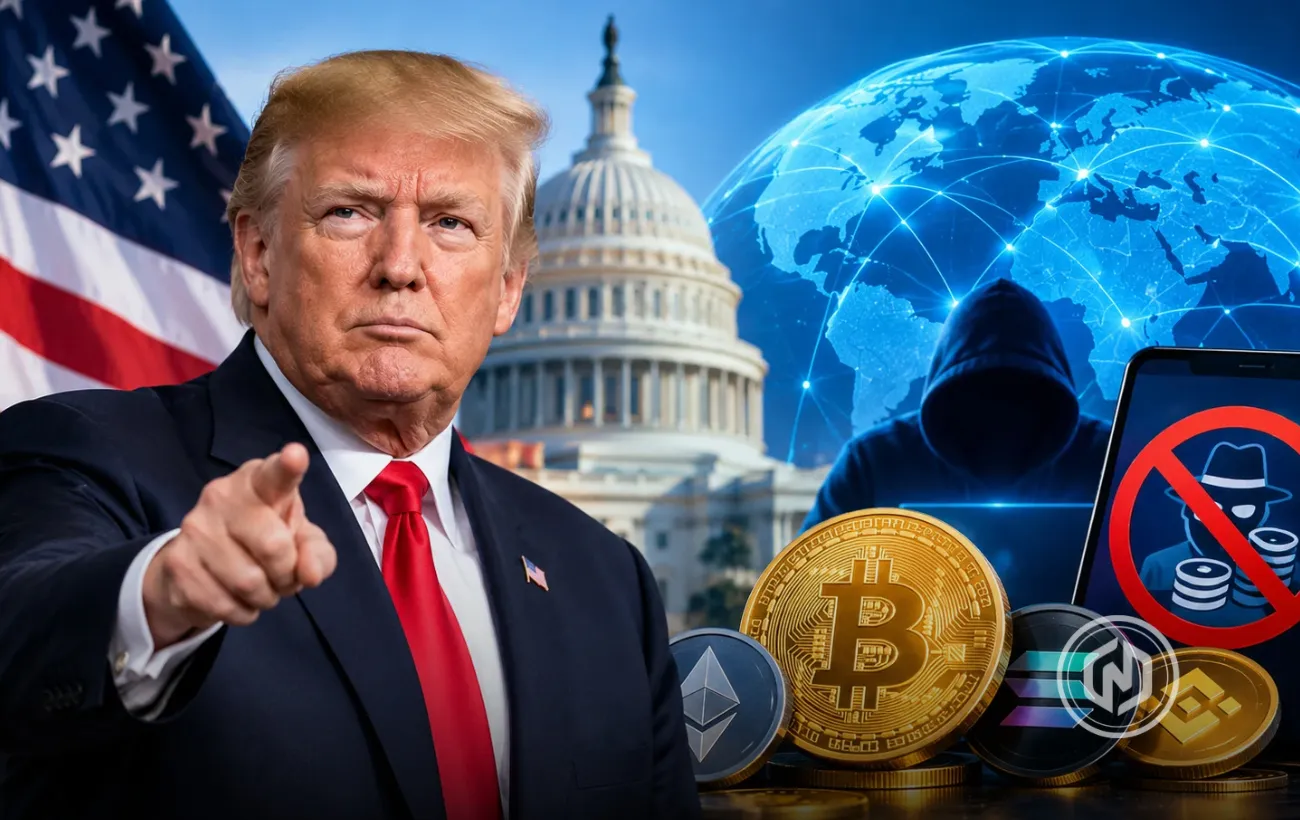
- President Trump is expected to highlight its administration’s efforts against foreign criminal networks running fraudulent crypto investment schemes at a White House cybercrime event on Wednesday.
- He might appear with senior officials including the Homeland Security Secretary, FBI Director, Defense Secretary, and Attorney General.
- The move comes after a sharp increase in online fraud, with Americans filing over 1 million internet scam complaints to the FBI in 2025 and crypto-related losses exceeding $11.3 billion.
U.S. President Donald Trump is expected to highlight his administration’s efforts to combat foreign criminal networks that target Americans with fraudulent cryptocurrency investment schemes during a White House event on Wednesday focused on cybercrime prevention.
A White House official told a prominent news website that Trump and senior cabinet members will discuss government seizures of fraudulent crypto investment websites and actions against online impersonation scams. According to the source, expected attendees include Homeland Security Secretary Markwayne Mullin, FBI Director Kash Patel, Defense Secretary Pete Hegseth, and Attorney General Todd Blanche.
The announcement comes amid rising reports of online fraud. Americans filed more than 1 million complaints with the FBI about internal scams in 2025, a 17% increase from the prior year, according to the bureau’s Internet Crime Complaint Center report. Crypto-related complaints accounted for more than $11.3 billion in reported losses that year.
Rising Scale of Crypto Scams and Fraud
Cryptocurrency investment fraud has become one of the most damaging categories of online crime. The FBI reported that crypto-linked losses reached approximately $11.36 billion in 2025, up about 22% from 2024. Investment scams alone made up roughly $7.2 billion of the total.
Older Americans were hit particularly hard. People aged 60 and over accounted for a substantial share of the losses. The average reported loss per crypto complaint was high, and tens of thousands of victims reported individual losses exceeding $100,000.
These schemes often involve pig butchering tactics, in which scammers build long-term relationships through social media or messaging apps before directing victims to fake investment platforms. Once money is sent, withdrawals are blocked, or additional fees are demanded. Many operations run from overseas scam centres that use forced labour and sophisticated social engineering.
In mid-October 2026, the Brooklyn District Attorney’s Virtual Currency Unit and the FBI shut down 241 fraudulent websites and seized 112 servers linked to an Eastern European crypto investment fraud network that had targeted primarily Russian-speaking victims in the United States, often through Facebook advertisements.
In March 2026, Trump signed an executive order directing federal agencies to prioritise identifying and prosecuting online scammers and to develop plans against transnational criminal organizations running scam centres. Additional steps have included sanctions, asset seizures, international partnerships, and the work of the Scam Center Strike Force. In the past, officials emphasized disrupting infrastructure, freezing assets, and cooperating with foreign partners to dismantle the networks that profit from these schemes.
State-Sponsored Hacking and the Lazarus Group
Alongside investment scams, large-scale cryptocurrency theft by sophisticated actors continues to pose a major threat. The North Korean-linked Lazarus Group has been attributed by U.S. authorities and blockchain analysis firms to some of the largest crypto heists in the last few years.
In September 2026, the cryptocurrency exchange Bitget suffered a major security breach resulting in the theft of approximately $387.5 million from its hot and warm wallets
These include the approximately $1.5 billion Bybit exploit in February 2025. Funds are generally moved quickly across multiple blockchains and laundered through complex networks, including Chinese intermediaries, according to on-chain investigators and security firms.
While distinct from the romance-and-investment style scams that dominate FBI complaint numbers, these state-linked operations contribute significantly to overall crypto crime and have drawn attention from U.S. and international law enforcement.
Crypto hack losses exceeded $768.5 million in September 2026, making it the single costliest month of the year for digital asset security. Driven primarily by major breaches on Bitget and the Liquid Network, this staggering total marks a 462% surge compared to the previous month of August.