


Key Highlights:
- Binance Pay has connected with Japan’s PayPay network through HIVEX, enabling 48 million international travellers to spend digital assets at millions of retail locations nationwide.
- The integration allows tourists to initiate seamless QR code payments using cryptocurrency while local Japanese merchants receive all final transaction payouts in Japanese yen.
- The BNB price shows a short pullback for a flag pattern formation, preparing for its next recovery leap upon breakout.
Binance has launched a cross-border payment integration enabling its international users to spend digital assets at millions of merchant locations across Japan. Effective September 30, 2026, the global cryptocurrency exchange is connecting its Binance Pay service with Japan’s domestic PayPay network. This system architecture relies on HIVEX, a network infrastructure that handles the underlying technical interoperability between the systems.
Local Currency Settlement for Merchants
According to the press release, the function is for overseas visitors from more than 100 countries visiting Japan. Around 48 million overseas Binance Pay users can now make retail transactions for travel-related activities such as dining, shopping, and lodging. Consumers scan the QR code to start the transaction, but Japanese merchants receive the settlement all in Japanese yen. This mechanism integrates existing fiat-based retail infrastructure with cryptocurrency platforms without requiring merchants to modify their current payment collection methods.
“As one of the world’s leading travel destinations, Japan is shaping the future of connected, cashless payments. Our integration with PayPay reflects a shared vision of making payments more seamless, borderless, and accessible for travelers visiting the country,” said Thomas Gregory, VP of Payments & Fiat at Binance.
Binance Pay Expands Asian Travel Corridors
The expansion comes as part of a larger plan to develop digital asset payment corridors along key travel corridors in Asia. The platform will connect with existing local QR code networks to ensure a smoother cross-border consumer retail payment process. One of the largest markets for this deployment is Japan, where the cashless bill-payment system is very well developed. The project serves as an operational template for connecting digital asset wallets directly into traditional, highly localized retail banking networks.
“This integration reflects the growing convergence of traditional fiat payment systems and digital assets, giving travelers more ways to pay while enabling PayPay-supported merchants across Japan to better serve international customers,” Thomas added.
BNB Price Prepares Next Leap With Flag Breakout
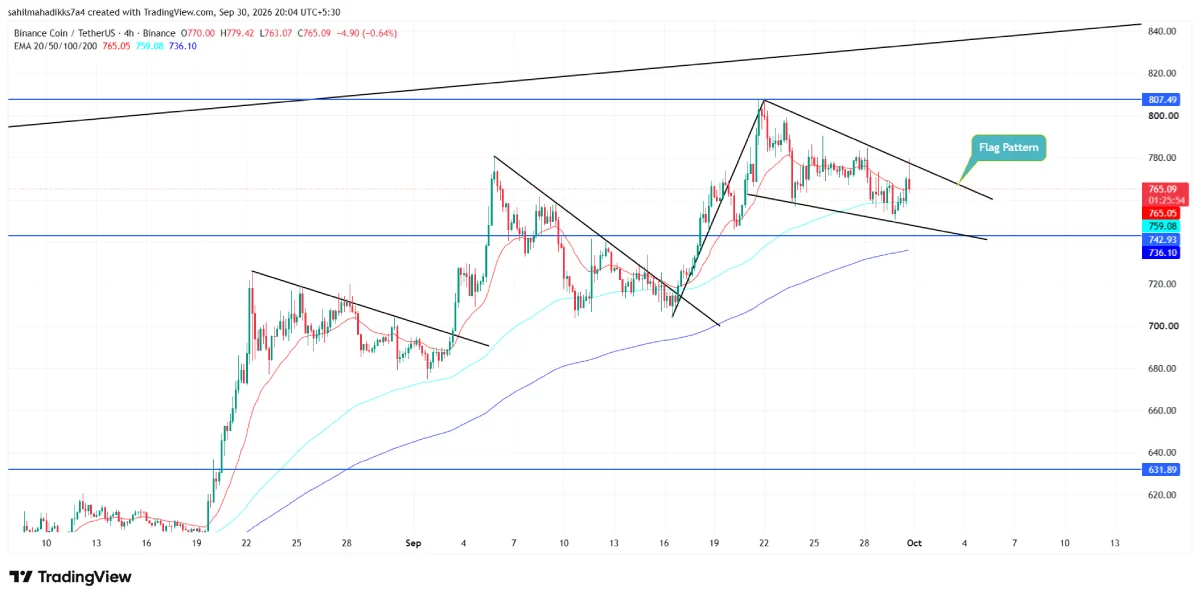
Amid the ongoing recovery in Binance Coin, its price recently formed another local high at $799 on September 21, 2026. The BNB price has since retraced 4.37% to trade at $772 and reach a market cap of $102.53 billion.
Recently, the BNB price has frequently formed such short pullbacks to recoup the exhausted bullish momentum. As shown in the 4-hour chart below, these pullbacks display the formation of a classic bullish continuation pattern called a bull flag.
A potential breakout from the pattern’s overhead resistance will accelerate the bullish momentum and push BNB toward the $840 region.
However, a broader analysis of BNB’s daily chart shows that the $840 resistance zone coincides with the long-coming resistance trendline of an expanding channel, as shown in the chart below. The Binance Coin price has already reversed twice from this resistance, signaling a potential pivot point for market participants.
If history repeats, the BNB price could revert from the dynamic resistance again, and traders can watch the 20-day exponential moving average to confirm a deeper correction. The 20-day has been active support for buyers, signaling the current strength in the recovery.
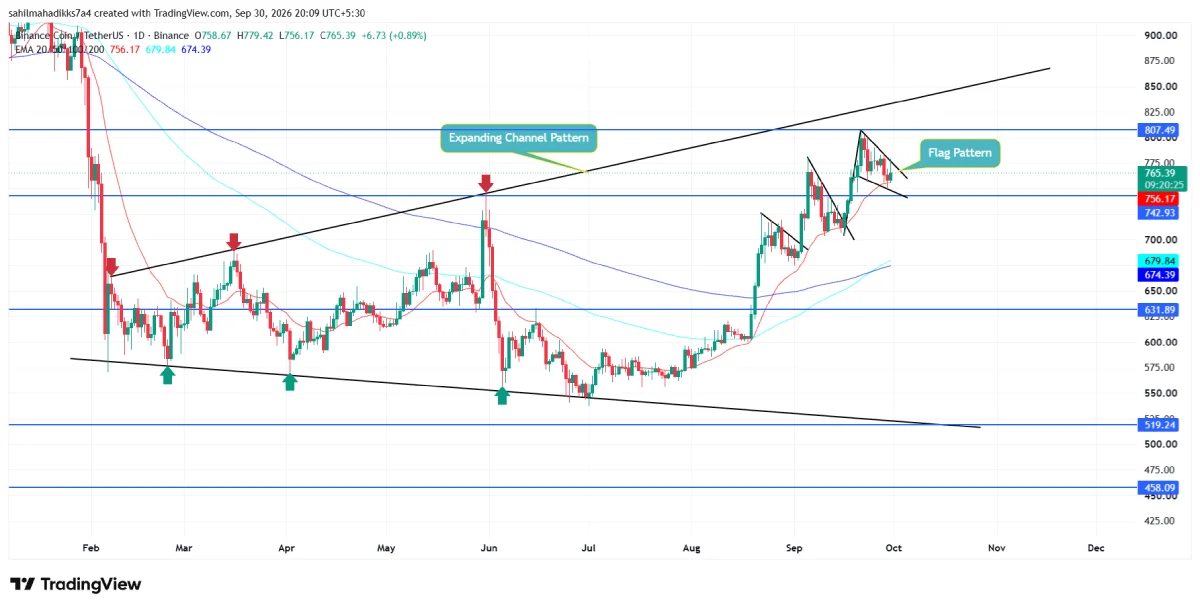
In addition, if the coin price breaks above the overhead resistance trendline with a strong breakout, the bulls could strengthen their grip over this asset for a higher recovery.