

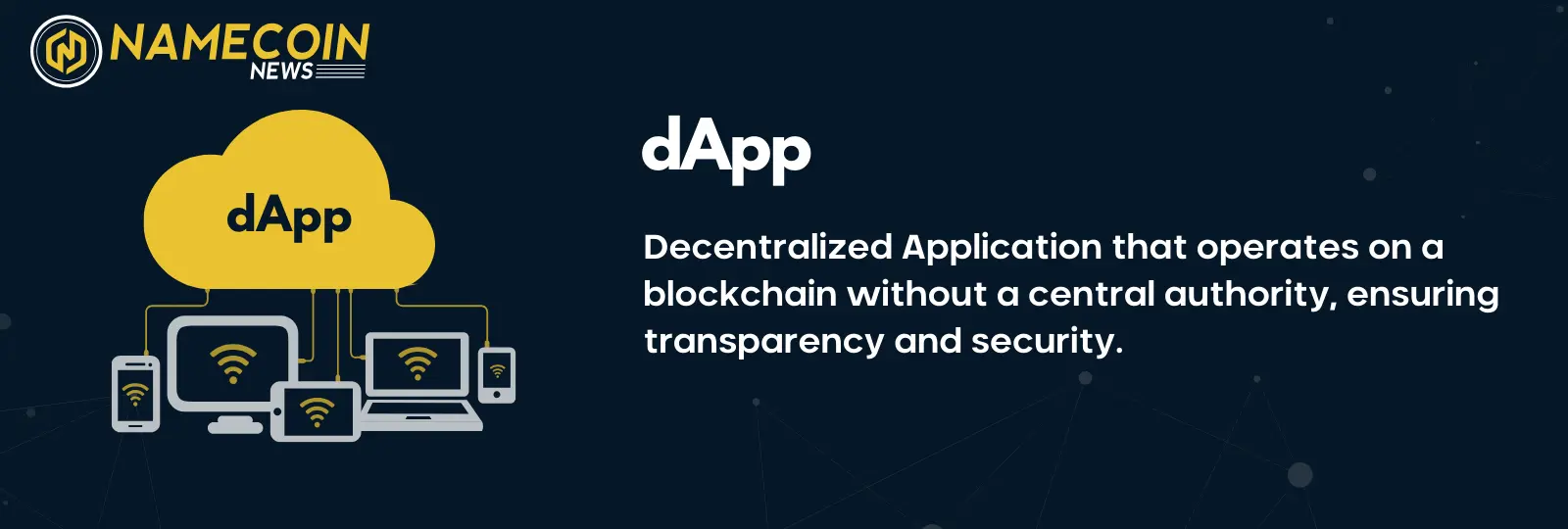


The more the blockchain develops, the more critical the role of the dApps, or decentralized applications, becomes. What exactly is a dApp, and how do these applications change technology and finance? This article delves into what a dApp is, how it works, its pros and cons, and which components make dApps a complete game-changer in cryptocurrency and blockchain technology.
What is a dApp?
To clarify what a dApp means, we have to break down the term. A decentralized application, or dApp, is defined as a software application that functions on a blockchain network, not on a hosted centralized server. Unlike applications running on a central host, dApps work through decentralized networks, such as those of Ethereum, creating much more transparent, secure, and self-sovereign operations.
In simple terms, it is an application that exists and runs across a distributed network of computers, utilizing blockchain technology to eradicate central authority or intermediaries.
How Does a dApp Work?
A dApp runs on a blockchain rather than a company’s private servers, which shapes how it’s built:
- Smart contracts – Most dApps run on smart contracts: self-executing programs with the rules of the agreement written directly into code, so they run automatically without a middleman.
- Decentralized network – The application and its data live across a distributed network of computers, so no single entity controls it.
- Tokens – Many dApps use their own tokens to reward participation, power in-app actions, or grant governance rights.
- Governance – Some dApps let token holders vote on protocol upgrades and changes, putting decisions in the hands of the community.
- Open source – dApp code is usually public, so anyone can inspect and verify how the application actually behaves.
Benefits of dApps
These design choices give dApps a distinct set of advantages over traditional apps:
- Decentralization and autonomy – With no central authority in control, users get more independence and aren’t dependent on a single company.
- User control – People keep control of their own data and assets instead of handing them to a central operator.
- Transparency – Because actions run through smart contracts on a public ledger, transactions are traceable and verifiable, which builds trust.
- Innovation – The open model lets developers build across many fields, from DeFi to blockchain gaming.
- Security considerations – The blockchain record itself is tamper-resistant, but dApp smart contracts can still contain exploitable bugs — so audited, well-reviewed code matters.
History of dApp
The idea of dApp seems to have had its seed with the invention of blockchain technology, especially with the inception of Ethereum in 2015, which literally allowed one to make use of smart contracts in the development of decentralized applications.
Here are some important historical moments in the history of dApp:
- 2009: Bitcoin invented the idea of a decentralized network for financial transactions.
- 2015: The launch of Ethereum brought smart contracts to the forefront and enabled developers to build dApps on the Ethereum platform.
- 2017: ICO boom: many dApps that utilize blockchain for different use cases started appearing
- 2020-2021: DeFi and NFT dApps went extremely mainstream, with applications such as Uniswap, Aave, and OpenSea starting to gain wide usage in the crypto space
These milestones follow a timeline of the development of a dApp and its growing influence across the crypto world.
Conclusion: The Future of dApp
In short, a dApp is an application built on a blockchain rather than on a company’s private servers — using smart contracts to remove intermediaries and give users more transparency, control, and autonomy over their data and assets. That model now powers some of the most active corners of crypto, from DeFi protocols like Uniswap and Aave to NFT marketplaces and blockchain games, and developers continue to push the idea into new fields beyond finance.
dApps aren’t without trade-offs — smart-contract bugs remain a real security risk, fees and speed can be limiting, and the user experience is still rougher than most centralized apps. But as blockchain networks mature and scaling solutions improve, those barriers are steadily falling. For anyone exploring decentralized alternatives to traditional software, dApps represent a meaningful shift in how applications are built and used, and their role in the crypto ecosystem looks set to keep expanding.