

Key Highlights:
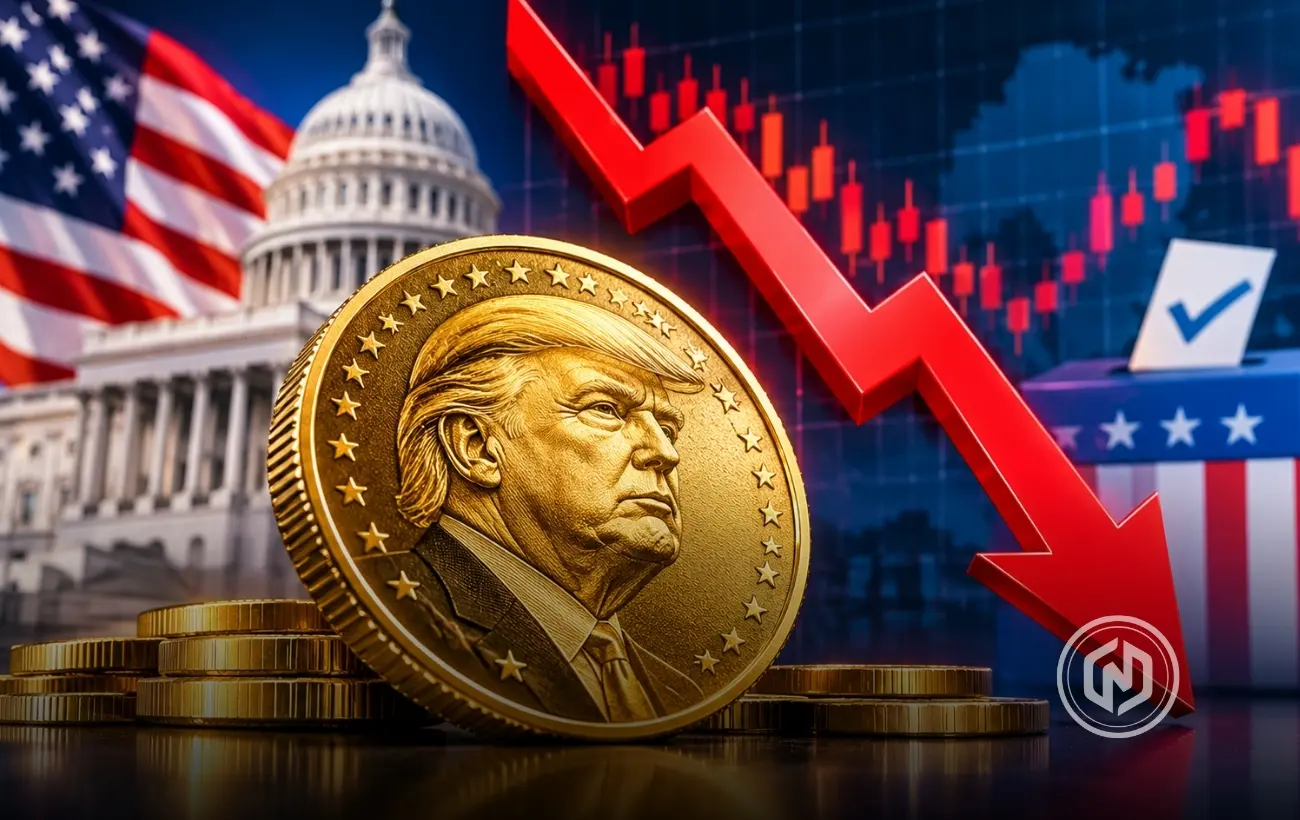
- Trump-linked TRUMP memecoin fell 17% to $1.33, while World Liberty Financial’s WLFI token declined more than 7% after Democrats won control of Congress in the US midterm elections.
- The political memecoin sector lost more than 16% of its market value, falling to $477 million, even as Bitcoin and other major cryptocurrencies rallied.
- The election outcome has raised concerns about potential investigations into Trump-linked crypto businesses and uncertainty surrounding the future of US digital asset legislation.
Two cryptocurrencies associated with US President Donald Trump led losses among the top 100 digital assets on Wednesday, even as the broader crypto market recovered following an overnight fall. The selloff followed the Democrats’ victory in the US midterm elections, which could make it more difficult for Trump to advance his cryptocurrency policy agenda through Congress. The outcomes have also raised concerns about increased scrutiny of businesses linked to the Trump family.
The contrasting performance of politically associated tokens and established cryptocurrencies has renewed questions about whether political influence alone can sustain demand for these virtual assets, especially as regulatory ambiguity increases.
Trump-linked Crypto Tokens Fall After the Midterm Elections
According to CoinMarketCap data, the official TRUMP memecoin fell 17% over 24 hours to $1.33, while World Liberty Financial’s WLFI governance token dropped more than 7% to $0.047. Both assets ranked among the biggest losers in the top 100 cryptocurrencies following the election results. The TRUMP token, launched in January 2025, is the official memecoin associated with President Donald Trump. WLFI, meanwhile, is the governance token of World Liberty Financial, a decentralised finance project backed by the Trump family and launched in 2024.
The selling pressure extended to other politically themed cryptocurrencies. MELANIA, the memecoin associated with First Lady Melania Trump, declined nearly 13% to approximately $0.066. A separate token named after Vice President JD Vance also fell nearly 12%, although it has no confirmed official connection to him. The political memecoin sector’s total market capitalisation dropped more than 16% to $477 million. At the same time, trading volume increased 123% to $437 million, suggesting a sharp rise in market activity during the selloff.
The decline also extended to traditional financial markets. Trump Media & Technology Group (NASDAQ: DJT), which owns Truth Social and in which Trump holds approximately 41%, reached a record low of $5.23 at the market open. The stock initially fell more than 11% from its previous close and was down approximately 16% around midday. It has lost more than 55% of its value this year. The company has expanded beyond its social media business into Bitcoin-related activities and prediction markets, although those initiatives have yet to deliver the expected results. Its shares were most recently trading at $4.55, compared with a 52-week high of $17.09.
How Election Results Affect Crypto Regulation and the Broader Market?
While Trump-associated tokens declined, the wider cryptocurrency market moved higher. Bitcoin gained more than 4% to approximately $80,500, while Ethereum’s Ether rose 6% to $2,433. BNB, XRP and Solana also recorded gains of between 2.5% and 3%. Overall, the total cryptocurrency market capitalisation increased 3.4% to $2.69 trillion. The divergence highlights how politically associated cryptocurrencies can respond differently to established digital assets.
Benjamin Sarquis Peillard, founder and CEO of DeFi platform Cap, told Cointelegraph that Bitcoin and other established cryptocurrencies are primarily influenced by liquidity, institutional investment flows and broader macroeconomic conditions. Politically linked tokens, however, are more sensitive to changing expectations surrounding Washington.
Peillard said the latest selloff could be a short-term market reaction. However, he questioned what would sustain long-term demand for these tokens beyond their association with a political figure. The election outcome could also influence the direction of US cryptocurrency regulation. One major concern involves the stalled Digital Asset Market Clarity Act, which failed to advance in the Senate earlier this year after falling short of the 60 votes required.
Democrats had pushed for stronger ethics provisions addressing potential conflicts of interest involving Trump’s cryptocurrency ventures. Four Republicans also opposed the legislation. With Democrats gaining control of Congress, the regulatory outlook for the industry could become more uncertain. “The midterm results introduce a new layer of regulatory uncertainty,” Peillard said, referring particularly to the potential impact on the pace and direction of digital asset legislation.
Trump-linked cryptocurrencies had already been declining before the election amid a broader market correction. Meanwhile, Bloomberg reported that cryptocurrency companies associated with Trump had hired lawyers and lobbyists in anticipation of potential investigations by Democrats.The combination of political uncertainty, regulatory concerns and questions about the long-term demand for politically themed tokens has added pressure to the sector. While established cryptocurrencies benefited from the broader market recovery, Trump-linked assets continued to struggle, highlighting the risks of relying heavily on political sentiment to support token valuations.