

What to Know
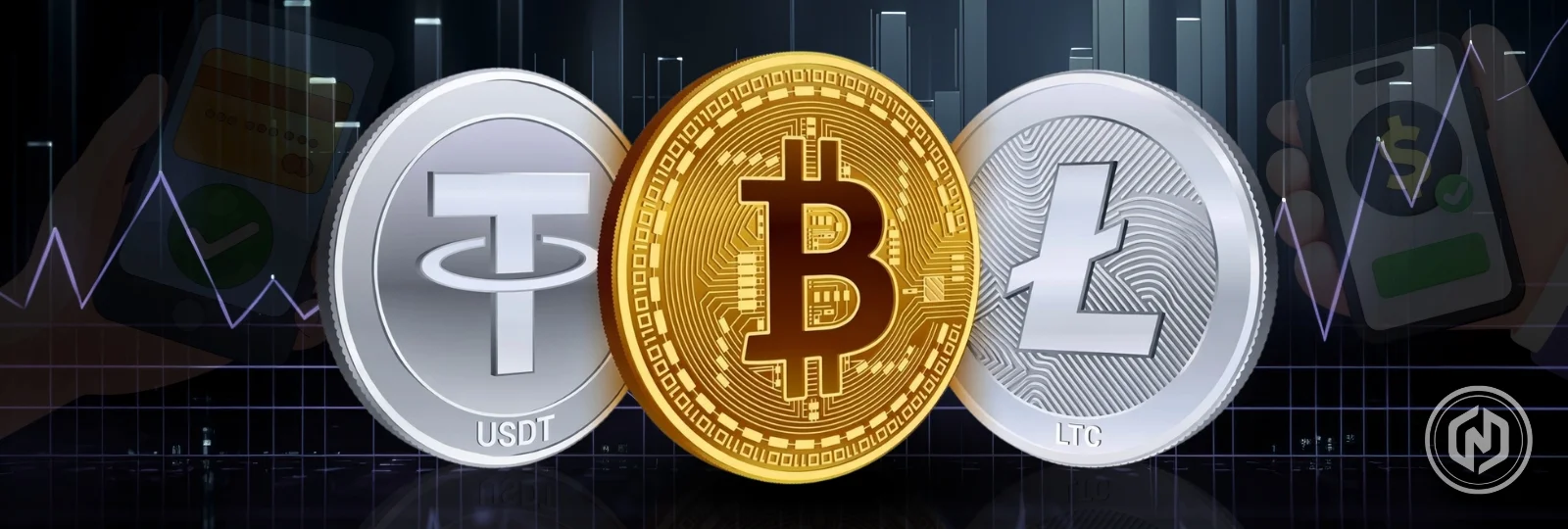
- Bitcoin led crypto payments in 2025, taking a 22.1% share as businesses trusted it for everyday transactions.
- USDT stayed widely used, while USDC grew fast as merchants shifted toward compliant stablecoins.
- Litecoin remained the third most-used crypto, valued for low fees, speed, and reliability.
Crypto payments in 2025 were not about hype or flashy headlines. Instead, they quietly became part of how businesses run their day-to-day finances. A new payments report shows that Bitcoin, USDT, and Litecoin continued to lead crypto payments, while merchants increasingly used crypto to settle funds, pay partners, and manage money across borders.
In total, 1.42 million crypto payments were processed during the year. That is fewer than last year, but the story behind the numbers is more important. Crypto payments were no longer just about customers paying at checkout. They were about how businesses receive, hold, and move money.
Bitcoin Takes the Lead Again
Bitcoin returned to the top spot in 2025, making up 22.1% of all crypto payments. This pushed it ahead of USDT, which had dominated in earlier years. Bitcoin’s comeback was not driven by price excitement. Instead, it came from trust.
Merchants and customers continue to see Bitcoin as reliable and neutral. The Bitcoin network, including the Lightning Network, was the most used payment network overall. Lightning made up over 11% of Bitcoin payments, helping users send money faster and at lower cost, while most payments still settled directly on the main Bitcoin network. For many businesses, Bitcoin has become a dependable way to receive and move funds, especially for international payments.
Stablecoins Shift as Rules Change
Stablecoins still played a big role in 2025, accounting for nearly 30% of all payments, but the balance between them changed. USDT remained the second most-used crypto overall, even as its usage dropped during the year due to regulatory changes in Europe. Many merchants stopped supporting USDT by mid-year, which caused payment volumes to shift rather than disappear.
USDC filled that gap quickly. While USDT declined, USDC orders grew sharply and became the main choice for stablecoin payments and payouts. Businesses preferred USDC because it offered clearer compliance and stability for daily operations.
Litecoin Stays Strong and Reliable
Litecoin held its position as the third most-used crypto for payments, reaching a 14.4% payment share in 2025. During the summer months, it even briefly became the second most popular option.
Litecoin’s strength comes from consistency. It is fast, has low fees, and has been around long enough for merchants to trust it. Many businesses use Litecoin as a dependable alternative when other networks are busy or expensive.
Crypto Becomes Business Capital
One of the biggest changes in 2025 was what merchants did after receiving crypto payments. More businesses chose to keep their funds in crypto instead of converting to cash. Crypto settlements rose from 27% to 37.5%, showing that merchants increasingly treat crypto as working capital. Stablecoin settlements also grew, especially in USDC.
Crypto payouts also became common. Businesses used crypto to pay vendors, partners, affiliates, and contractors. Most payouts were done in USDC, followed by Bitcoin and Ethereum. Importantly, 85% of payouts were automated, meaning crypto payments are now built directly into business systems.
Networks and Regions That Stood Out
Beyond Bitcoin, other networks gained attention. Ethereum became more relevant again, especially for stablecoin payments. Layer 2 networks like Polygon, Arbitrum, and Base also grew steadily as businesses looked for cheaper and faster ways to move funds.
Crypto payments remained global. The United States led in total activity, while the Netherlands climbed into the top three. Nigeria stayed one of the most active markets, showing how important crypto remains where traditional banking is limited. By continent, Europe processed the most payments, followed by North America and Asia.
Final Thoughts
In 2025, crypto payments did not feel dramatic. There were fewer spikes and fewer big headlines. But across more than a million transactions processed, a clear pattern emerged. Crypto payments grew up.
Businesses used crypto to receive money, hold value, and move funds efficiently. Bitcoin proved its staying power. USDT made room for USDC. Litecoin stayed dependable. And automation became the standard. This is what real adoption looks like.
Also Read: Galaxy Digital to Launch $100M Hedge Fund in Q1 2026